Quinn Otto · 26 September 2026
Lichen Symbiotic Partnerships on Modern Building Facades: Tracking Algal Fungal Interactions in Polluted Air Zones
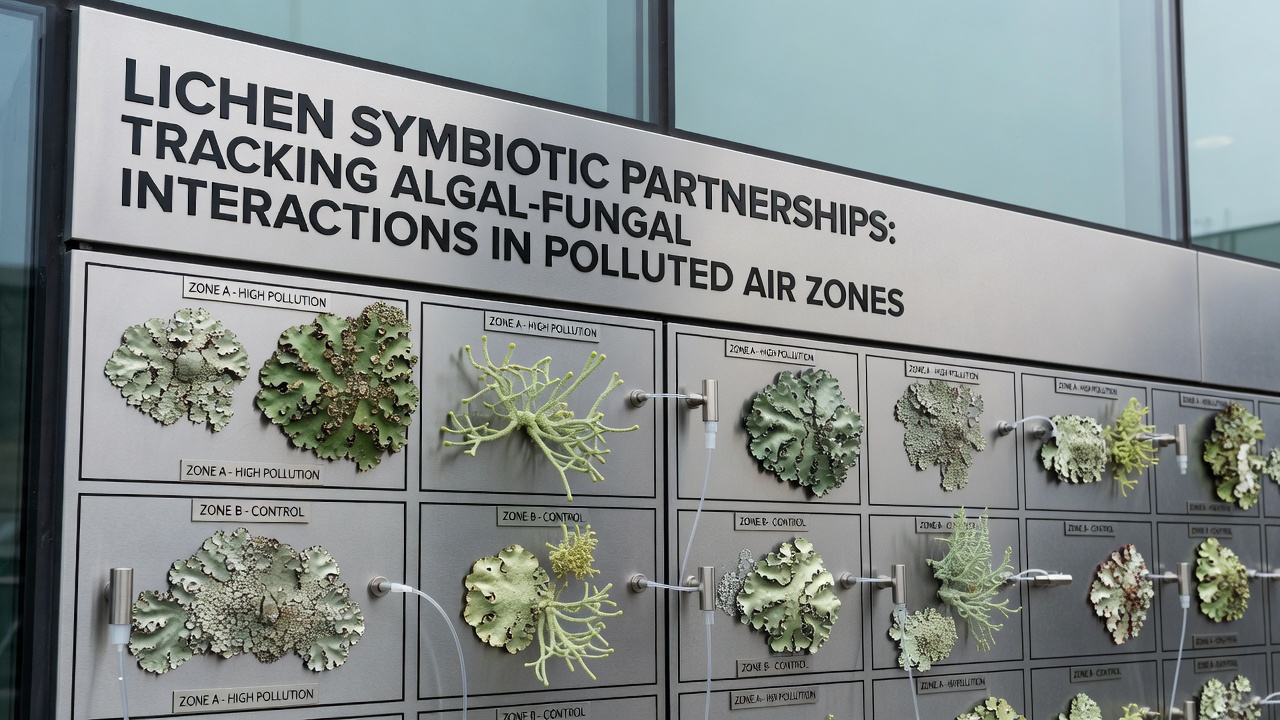
Modern building facades in cities worldwide host complex communities where algal and fungal partners form lichen structures that persist despite exposure to vehicle emissions and industrial outputs. These partnerships involve a fungal partner providing structural support and protection while the algal component conducts photosynthesis to supply carbohydrates. Data from urban monitoring programs show that certain lichen species establish on concrete, glass, and stone surfaces within months of construction completion, particularly in zones where nitrogen levels remain elevated from traffic sources.
The Algal-Fungal Dynamic in Urban Settings
Researchers have documented how the fungal hyphae penetrate substrate pores on building materials to anchor the lichen thallus, while algal cells remain embedded in a protective matrix that shields them from desiccation and ultraviolet exposure. In polluted air zones, species such as those from the genera Xanthoria and Lecanora demonstrate higher tolerance because their algal partners maintain photosynthetic efficiency even when sulfur dioxide concentrations fluctuate seasonally. Studies conducted across multiple metropolitan areas indicate that the ratio of algal to fungal biomass shifts measurably when particulate matter exceeds annual thresholds set by environmental agencies.
Colonization Patterns on Contemporary Materials
Glass curtain walls and composite cladding present different challenges than traditional masonry, yet lichens colonize both through micro-cracks and surface weathering that develops over time. Observations from long-term surveys reveal that north-facing facades retain higher moisture levels, supporting denser growth compared with south-facing exposures that experience greater solar heating. In September 2026, expanded remote sensing initiatives across European and North American cities are scheduled to release datasets tracking colonization rates on newly constructed high-rises, allowing direct comparison with older building stock.
Responses to Polluted Air Conditions
Air quality measurements paired with lichen surveys demonstrate that certain partners decline rapidly when ozone levels spike, whereas others increase in abundance because they utilize deposited nitrogen compounds as nutrients. European Environment Agency reports compiled from monitoring stations across member states show consistent patterns where lichen diversity drops near major roadways but rebounds in adjacent parks where particulate filtration improves conditions. These interactions serve as living indicators because the algal component responds first to chemical stress, altering chlorophyll fluorescence before visible changes appear in the fungal structure.
Monitoring Techniques and Data Collection
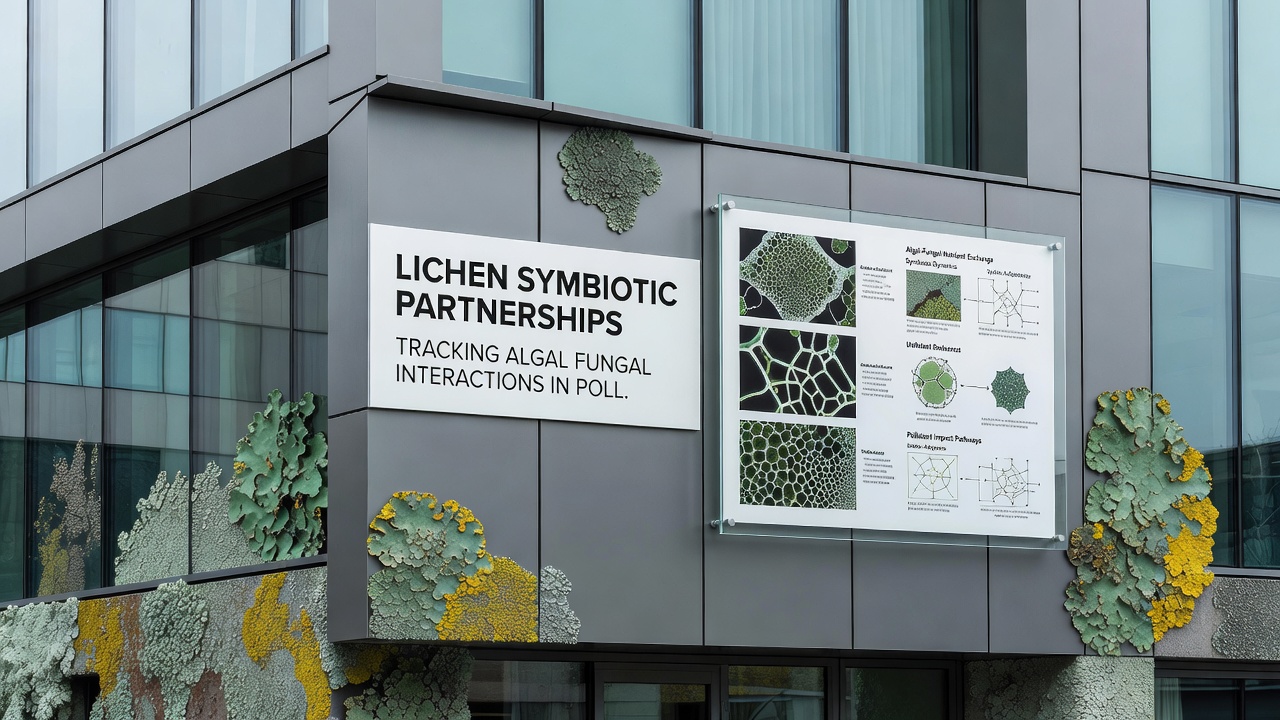
Scientists employ fluorescence microscopy and DNA sequencing to separate algal and fungal contributions within individual thalli collected from facade samples. Portable spectrometers now measure photosynthetic activity in situ without disturbing established colonies, generating continuous records that correlate with nearby air quality sensor readings. According to EPA studies on bioindicators, such integrated approaches provide higher resolution than traditional filter-based sampling alone, especially in zones where pollution gradients change over short distances.
One research team tracking sites in coastal cities found that salt deposition from marine air combines with urban pollutants to accelerate thallus fragmentation, releasing algal cells that may seed new colonies on adjacent structures. Another project in inland industrial districts documented slower growth rates but greater species specialization among nitrogen-tolerant lichens. These findings emerge from repeated visits to the same facade sections, building time-series that span multiple years and capture seasonal shifts in both partners.
Applications in Environmental Assessment
City planners incorporate lichen mapping into environmental impact assessments because the presence or absence of particular partnerships signals cumulative exposure levels that standard instruments may miss during short sampling windows. University-led initiatives in Australia have cross-referenced lichen distribution data with satellite-derived pollution estimates, confirming that facade communities reflect ground-level conditions more accurately than rooftop monitors in some districts. Such correlations strengthen when researchers account for building orientation, material porosity, and proximity to emission sources.
Additional work examines how restoration projects that reduce local nitrogen oxides affect lichen recovery timelines on cleaned surfaces. Records from multiple sites indicate that recolonization begins within two years when emission reductions exceed 30 percent, with algal partners re-establishing before full fungal integration completes. These patterns hold across different climate zones provided that substrate chemistry remains compatible.
Conclusion
Tracking algal-fungal interactions on modern building facades supplies measurable evidence of air quality trends in polluted zones where conventional methods require extensive infrastructure. Continued expansion of standardized protocols and coordinated data releases, including those planned for September 2026, will refine understanding of how these partnerships respond to changing emission profiles. The resulting records support more precise evaluations of urban environmental conditions without relying solely on mechanical sensors.