Sam Günther · 12 September 2026
City Concrete as Canvas: Documenting Lichen Biodiversity in Built Environments
Urban environments present unique opportunities for studying lichen biodiversity, and concrete structures serve as stable substrates that support a range of species across cities worldwide. Researchers document these organisms through systematic surveys that track species composition, distribution patterns, and responses to air quality variations. Data from multiple metropolitan areas reveal that concrete surfaces host assemblages including crustose and foliose forms, with certain taxa showing tolerance to alkaline conditions created by cementitious materials.
Concrete Substrates and Lichen Colonization
Concrete offers a mineral-rich base that differs from natural rock, yet lichens adapt through specialized attachment mechanisms and metabolic adjustments. Studies indicate that pH levels on fresh concrete start high but decrease over time as weathering occurs, allowing more species to establish. Observers note that older infrastructure such as bridges, retaining walls, and building facades often support higher diversity because surface microtopography develops cracks and pores that retain moisture. Geographic factors influence outcomes as well, with temperate regions showing greater coverage compared to arid zones where desiccation limits growth.
Documentation Methods and Field Protocols
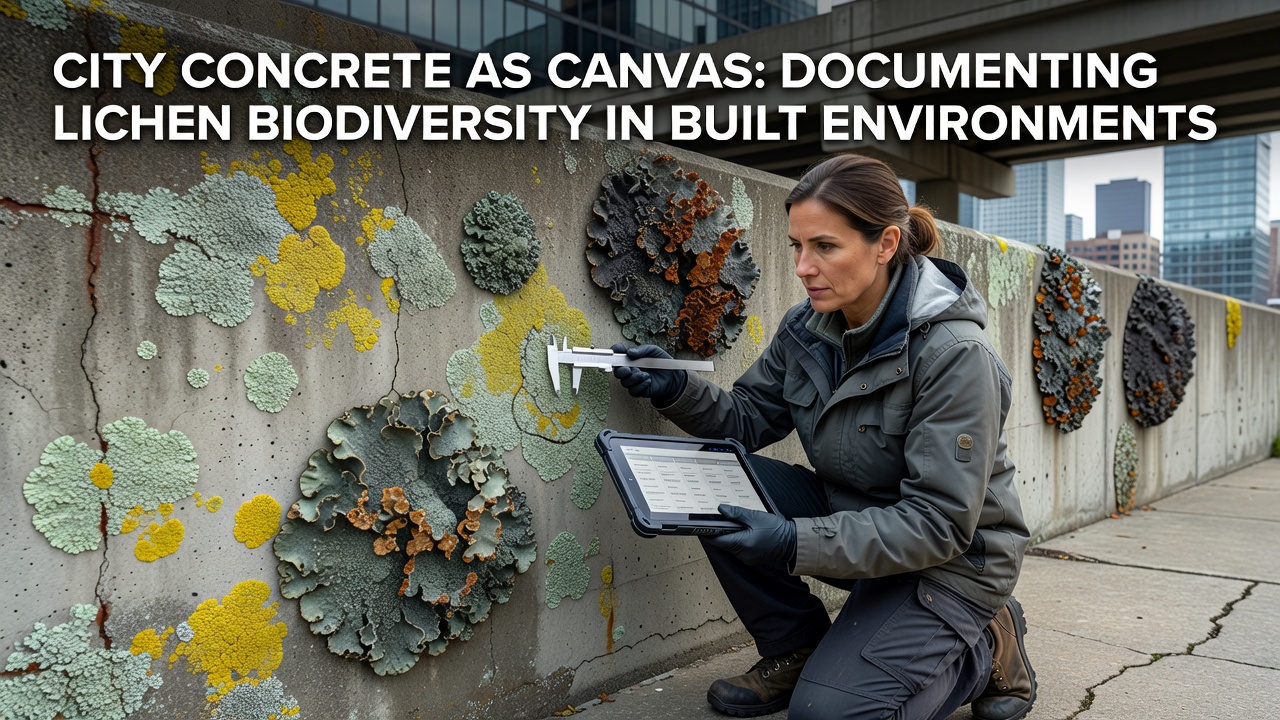
Documentation relies on standardized protocols that combine field identification with laboratory verification. Teams use quadrat sampling along transects to record species presence and abundance, while photographic records capture changes over multiple seasons. Molecular techniques supplement traditional taxonomy when morphological traits prove ambiguous, and databases compile records from citizen science platforms that expand coverage beyond professional teams. In practice, one project coordinated across European cities employed portable spectrometers to measure chlorophyll fluorescence as a proxy for lichen health on concrete walls. Such approaches generate comparable datasets that highlight regional differences in community structure.
Biodiversity Patterns Across Cities
Findings from surveys demonstrate that certain lichen genera dominate built environments because they tolerate elevated nitrogen and particulate deposition common near roadways. Species within the genera Lecanora and Xanthoria appear frequently on concrete, whereas more sensitive taxa remain restricted to less disturbed edges of urban parks. Research indicates that proximity to traffic correlates with shifts toward nitrophilous communities, yet overall species richness can remain substantial when surfaces receive periodic moisture from rainfall or irrigation runoff. Comparative data between North American and Australian cities show overlapping dominant species alongside unique regional endemics adapted to local climate regimes.
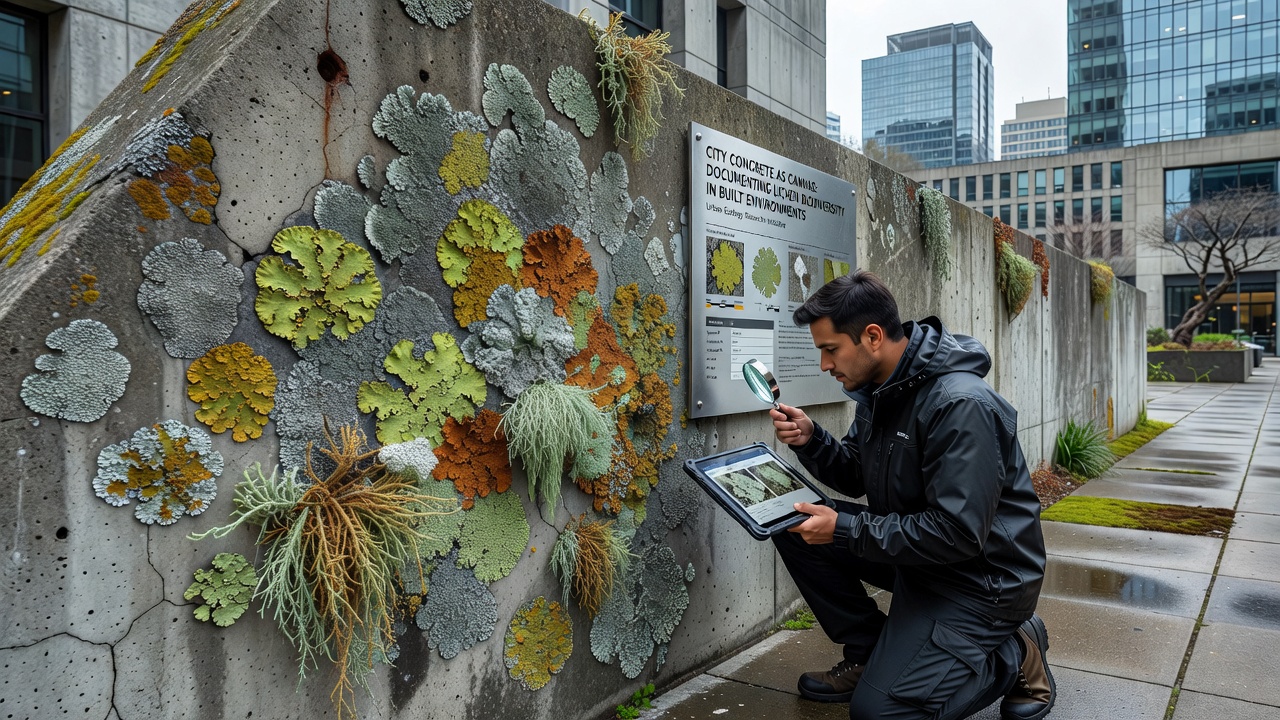
Long-term monitoring programs track these patterns through repeated visits that reveal succession stages on newly poured surfaces. Data collected in Vancouver and Melbourne illustrate how initial colonizers prepare the substrate for later arrivals, creating layered communities over decades. According to reports from the U.S. Environmental Protection Agency, urban lichen inventories contribute to broader assessments of air quality trends because certain species respond predictably to pollutant loads.
Environmental Influences and Seasonal Dynamics
Seasonal cycles affect lichen activity on concrete, with growth rates increasing during cooler, wetter months and slowing under summer heat. Temperature fluctuations cause expansion and contraction of the substrate, which can dislodge thalli or create new microhabitats. Light exposure varies by building orientation, leading to distinct communities on north-facing versus south-facing walls. Observers record that shaded areas maintain higher moisture retention and support shade-tolerant species, while sun-exposed concrete favors drought-resistant forms. Precipitation chemistry also plays a role, because acid rain or alkaline dust deposition alters surface conditions and influences competitive interactions among species.
Integration with Broader Urban Ecology Research
Documentation efforts connect with wider studies of urban biodiversity that include vascular plants, insects, and microbes sharing the same concrete habitats. Researchers coordinate sampling schedules so that lichen data align with measurements of soil chemistry and atmospheric deposition collected at the same sites. In September 2026, an international workshop on built-environment ecology will convene specialists to compare protocols and synthesize findings from ongoing projects across multiple continents. Such gatherings facilitate standardization of metrics that improve cross-city comparisons and support predictive models of how future infrastructure materials might influence lichen assemblages.
Conclusion
Concrete surfaces in cities function as accessible canvases for lichen biodiversity documentation, yielding datasets that inform both ecological theory and practical conservation planning. Continued monitoring through combined professional and citizen efforts expands the geographic scope of records, while technological advances refine species identification and health assessment. Evidence from diverse urban settings demonstrates consistent patterns alongside local variation driven by climate, pollution, and substrate age, providing a foundation for future investigations into how built environments support biological communities.